
News

CBAM and Life Cycle Assessment (LCA): How to declare your real emissions and avoid surtaxes
With the implementation of the Carbon Border Adjustment Mechanism (CBAM), transparency regarding the embedded emissions of products has become mandatory. It is no longer a matter of global estimates, but of precisely measuring the carbon impact of manufacturing every single ton of imported raw material.
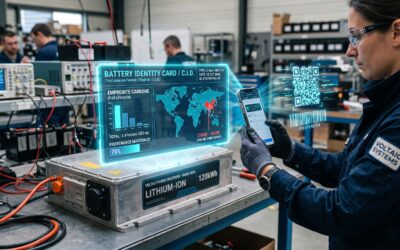
EU regulation 2023/1542: What are the new battery requirements?
The battery sector is undergoing rapid transformation, driven in particular by the development of electric vehicles, energy storage and electricity grid flexibility. To regulate this development and reduce the environmental impacts associated with batteries, the European Union adopted Regulation (EU) 2023/1542 concerning batteries and waste batteries.

Heatwaves are just a symptom: how to build a genuine climate change adaptation strategy
Discover why businesses must combine decarbonisation with climate change adaptation. Learn how to assess risks and build a resilient corporate strategy today.

Material audit: a structuring approach to managing your flows and supply chains
Raw materials are at the heart of current economic challenges and ongoing geopolitical conflicts. Between shortage risks, procurement competition, and skyrocketing prices, implementing an initiative to reduce material vulnerability is a highly strategic decision. To get started, ADEME (the French Agency for Ecological Transition) has developed a well-thought-out methodology: the material audit (bilan matières).

Recycled content: what the percentages really hide
Recycled content is a valuable indicator, but a precarious one if not rigorously defined. Without traceability and standardisation of your suppliers’ data, the conclusions of a Life Cycle Assessment (LCA) may be invalidated. Your eco-design initiatives then risk being based on completely flawed premises.

Airports and climate: adaptation becomes a business continuity challenge
An aircraft unable to take off due to extreme heat. A runway rendered unusable after a heavy rainfall event. Infrastructure weakened by more frequent and intense storms.
For a long time, climate challenges in the aviation sector were primarily addressed through the lens of decarbonisation. Today, however, another issue has become unavoidable: the ability of airport infrastructure to remain operational within an increasingly volatile climate context.
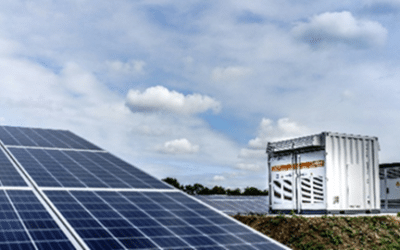
LCA of a storage project: How to assess its environmental benefits?
Energy storage has become essential to our energy transition and provides a solution to the challenge posed by the intermittency of renewable energy. However, assessing the carbon footprint of a storage facility over its entire life cycle (whether it is stand-alone, coupled with a power generation plant, or used for self-consumption) proves to be a real challenge. How can we demonstrate that an asset that does not produce energy can be environmentally friendly?

Climate Risks: The Greatest Danger Is Failing to Anticipate
Industrial leaders, infrastructure managers, (air)port operators: what if climate risks were already reshaping your performance… without you having fully integrated them into your strategy?

Eco-design: a strategic tool for sustainable innovation
In a context marked by the strengthening of environmental regulations and the acceleration of corporate climate commitments, eco-design is becoming an essential lever.
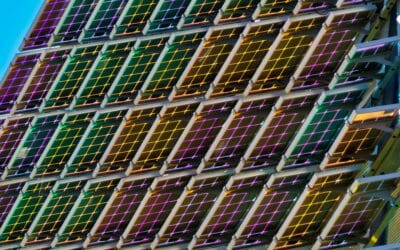
Eco-modulation criteria for photovoltaic panels: understanding and anticipating
The energy transition is not just about producing renewable electricity; it also involves rethinking equipment design to limit their environmental impact throughout the entire life cycle. As such, the AGEC law introduced the principle of eco-modulation, applied to the photovoltaic sector through Soren.

EPD: The international standard for steering your environmental performance
In a landscape of increasingly stringent environmental requirements, the EPD (Environmental Product Declaration) has established itself as the universal benchmark. It serves as a strategic lever for manufacturers looking to showcase the environmental performance of their products on an international scale.

Environmental Impact Assessment: does it apply to my photovoltaic project?
Are you planning to install a solar power plant or a photovoltaic project? Before you get started, one essential question arises: is your project subject to an Environmental Impact Assessment ?

FDES & PEP: How can you promote the environmental performance of your products?
Environmental awareness is now shaping purchasing decisions, and the market increasingly demands tangible proof of environmental performance. In this context of growing transparency, manufacturers and industrial companies must be able to quantify and demonstrate the impacts of their products across their entire life cycle.

ADEME 2022 methodological guide on the carbon footprint of projects: what you need to know !
The ADEME Methodological Guide emphasises that environmental authorities consider greenhouse gas (GHG) emissions to be insufficiently taken into account in environmental assessments. With increasing climate transparency requirements and carbon neutrality targets, renewable energy and recovery project developers are required to integrate carbon impact from the design phase onwards.
Published in 2022 but still relevant today, the ADEME methodological guide proposes a clear method that is increasingly required by the French Regional Environmental Authority Missions (MRAe).
In this article, discover what this guide covers, the key points to remember and concrete strategies for use in your project.

Eco-modulation of photovoltaic panels : Soren’s criteria
A photovoltaic panel is not just a generator of green electricity: it is also a product with a full life cycle, environmental impacts, and an end-of-life phase that must be anticipated. This is the purpose of eco-modulation, introduced by the French government and implemented by Soren, the approved eco-organization for the collection and recycling of solar panels in France.