
Energy storage has become an essential pillar of our energy transition and provides a solution to the challenge posed by the intermittency of renewable energy. However, assessing the carbon footprint of a storage facility over its entire life cycle (whether it is stand-alone, coupled with a power generation plant, or used for self-consumption) proves to be a real challenge. How can we demonstrate that an asset that does not produce energy (and even loses some) can be environmentally friendly?
This is one of the main topics within energy storage. If we focus solely on the manufacturing of the system (lithium-ion cells for batteries, for instance) and its installation, the carbon footprint is inherently positive (meaning it emits greenhouse gases – GHG). Yet, if the project is properly scaled and intelligently managed, the environmental benefits over its entire lifespan more than offset this initial footprint.
The challenge for project developers is therefore to evaluate this “carbon savings” through a Life Cycle Assessment (LCA) of their project. To do this, we must look beyond the battery itself and focus on what it helps avoid. Let’s explore how to assess and highlight the carbon footprint of your installations.
Assessing avoided emissions
Once the facility’s carbon impact has been calculated, we can quantify its avoided emissions. Be careful: this does not mean mathematically subtracting these emissions from the project’s carbon footprint to display an artificially zero footprint. The battery will always have its own impact. The correct approach consists instead in comparing our project to a “reference scenario” (what would happen on the grid if this project did not exist?). It is through this comparison that we can demonstrate the overall environmental benefit of the project.
Indeed, the most common mistake when assessing the environmental impact of a storage project is to omit its use phase. A battery is a flexibility asset: its purpose is not to generate electricity, but to shift its use in time relative to when it was produced. It is through this role that GHG emissions can be avoided.
The idea is simple: how much CO2e has the project prevented from being released into the atmosphere through its operation? To calculate and highlight this, it is essential to understand the environment and the usage scenario of the installation. Let’s have a look at the following two examples, which are common setups for storage facilities:
Scenario 1: Integration with a solar photovoltaic plant: the hunt for curtailment
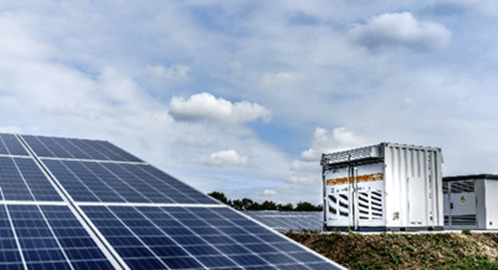
Let’s imagine that our project involves a battery integrated with a solar photovoltaic plant. During production peaks, the grid is sometimes unable to absorb all the electricity generated by the facility. National or even European demand may be lower than production. In such cases the plant’s electricity output must then be limited to avoid negative prices (where the producer has to pay to produce). The photovoltaic installation will then curtail (cap) its production, leading to a loss of renewable electricity.
When these situations occur on a facility coupled with a storage solution, the system will store this surplus electricity that would otherwise not have been produced. By feeding it back into the grid in the evening, when demand is higher, it injects 100% renewable electricity at a time when thermal power plants might have been fired up to meet demand. The environmental benefit here is direct: we maximize the production of renewable electricity that would otherwise have been wasted while limiting the activation of polluting thermal plants.
Scenario 2: A grid-connected battery (Stand-alone)
If the battery is simply connected to the national power grid for trading (buying/selling), the logic is different but equally valuable. And this is where the excellent news comes in: the economic optimum is (almost always) aligned with the environmental optimum. In the energy market, electricity is cheapest (or even negatively priced) when it is abundant, that is, when wind turbines and solar panels are producing. Conversely, it is expensive in the evening, during peak consumption hours, because the grid must turn on backup thermal (gas) plants to supply the electricity needed to meet demand.
By charging at low cost, the battery stores electricity that is very often produced by renewables and has a very low carbon intensity. By discharging at a higher price, it prevents the grid from starting up thermal plants that run on fossil gas. The emissions avoided by the project therefore correspond to the difference between the emissions of the avoided fossil source and the low emissions of the stored renewable energy.
By comparing the project’s avoided emissions to its net emissions, we can determine if the facility is virtuous from a carbon point of view. Indeed, if the emissions avoided by the project are greater than the emissions generated over its life cycle, then the project can be considered environmentally beneficial.

Different scenarios: The importance of time granularity
We have seen that to highlight the carbon benefit of a storage project, we must look at its avoided emissions. To account for these, using an annual average of the French grid’s carbon intensity (around 31 gCO2e/kWh in 2025 according to Electricity Maps) to calculate a project’s carbon impact doesn’t really make sense. Because electricity generation sources and the grid’s carbon intensity vary constantly, the environmental footprint of a storage project plays out on a much finer time scale!
Thus, to model avoided emissions relevantly, the project analysis must be performed using the finest possible time granularity (hourly, or even down to the quarter-hour or minute). This is the only way to accurately overlay the battery’s charge/discharge curve with the national grid’s carbon intensity curve. Above a certain level of precision, the analysis of avoided emissions loses its meaning.
This methodology is supported by french leading institutions like ADEME. All scenarios (from ADEME, RTE, CRE, etc.) show that the massive deployment of renewables in France will require tens of gigawatts of flexibility (including storage projects), and that their environmental assessment must absolutely take into account this temporal dynamic of the electricity mix.
Specific constraints: Why is every project unique?
If we insist on precise modeling of the operating scenario, it is because each project is tied to its own specific industrial and economic context. The valuation of a project’s environmental footprint must therefore reflect its specific context.
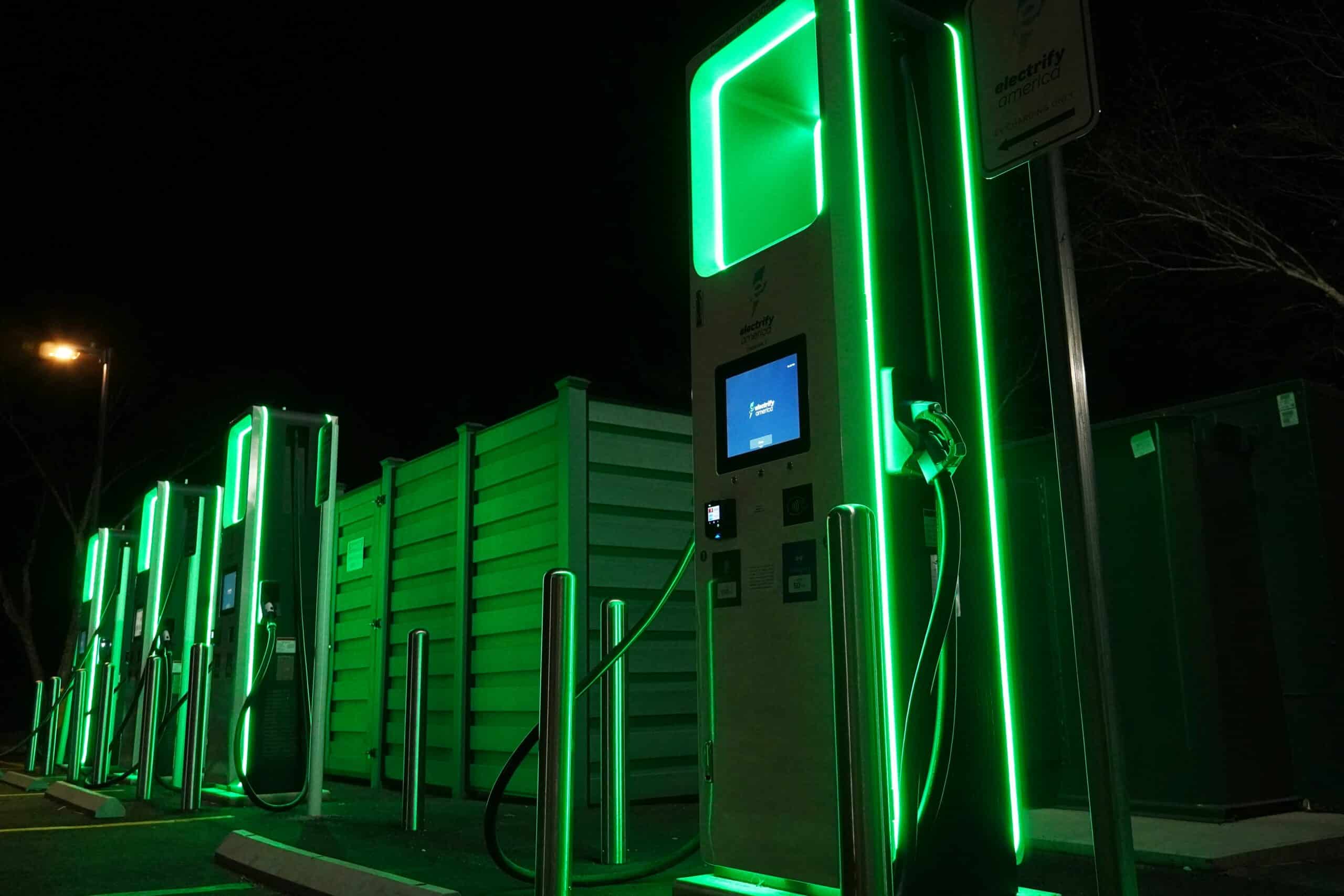
Take the example of a company that couples its solar panels, its battery, and the charging stations (EVSE) for its electric vehicle fleet. The energy management system (EMS) algorithm will not just seek the financial optimum on the grid. It will have to respect an operational constraint: “The vehicles plugged into the charging stations must absolutely be recharged to 80% before 5:00 PM for the employees’ end of the day.” This constraint will force the battery to discharge at a specific time to power the cars, thereby altering its natural charging profile. In return, the system could use compatible vehicles (V2G – Vehicle-to-Grid) as additional storage capacity! This is exactly why the carbon footprint of every storage project is unique. There is no universal magic formula: the balance depends on geographic location, market prices, the storage technology used and its capacity, and above all, local usage constraints and the charge/discharge and integration scenario.
Modeling for better valuation
Highlighting the environmental gain of a storage system is a complex exercise, but one with real value. Whether it is to meet your CSR obligations, secure green financing, or simply validate the relevance of your investment, performing a Life Cycle Assessment of your storage project makes perfect sense. While batteries are often criticized, you must be able to prove that the impact of their manufacturing and installation will be fully offset by the emissions avoided over their lifespan.
Do you have a storage project and want to conduct a detailed analysis of its operational cycle and environmental impact (emissions avoided, hourly modeling, optimization of usage)?
We are here to guide you
Contact us to assess your project’s potential and maximize your benefits over its entire lifespan!