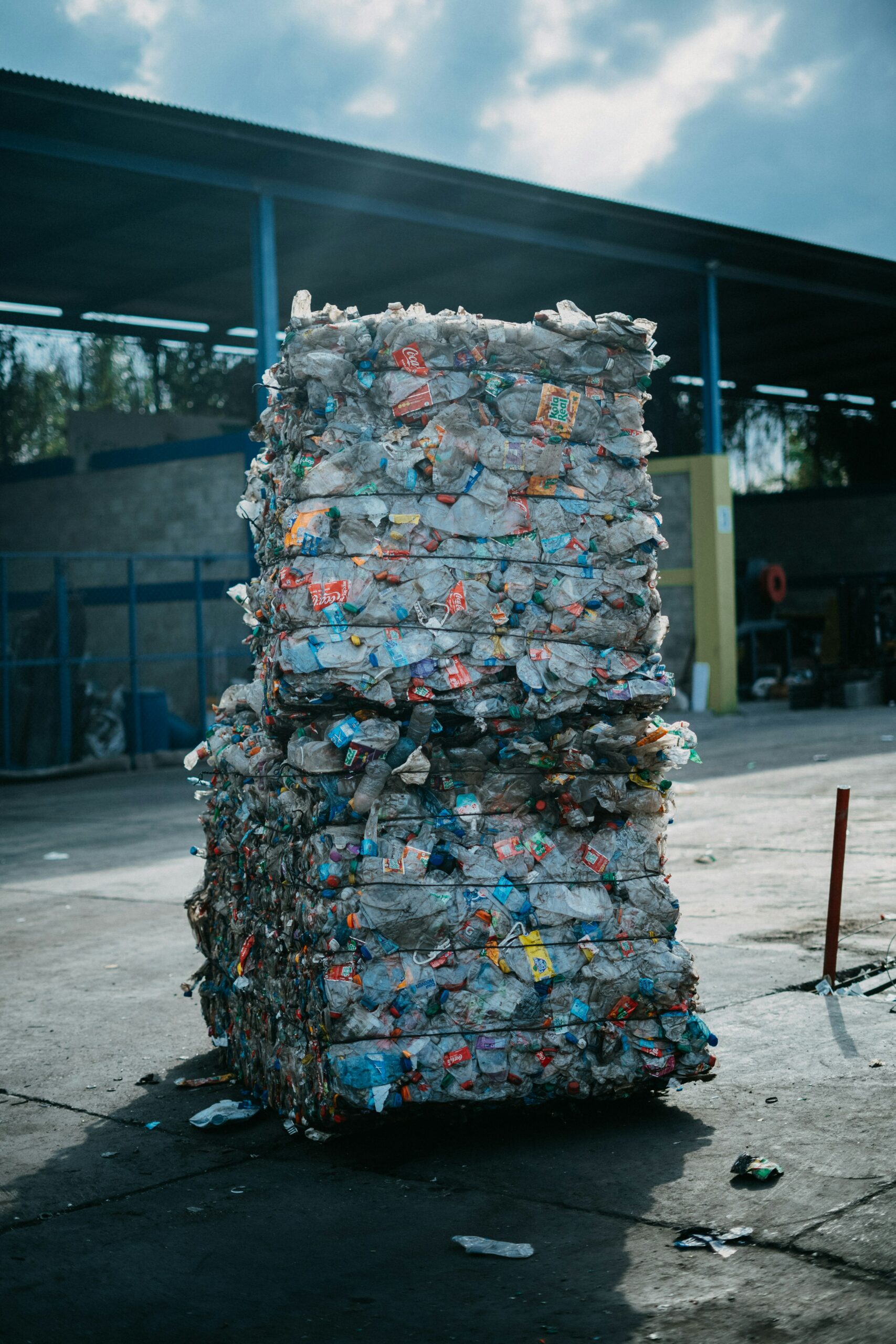
Recycled content: what the percentages really hide

Recycled content: what the percentages really hide

Recycled content is a valuable indicator, but a precarious one if not rigorously defined. Without traceability and standardisation of your suppliers’ data, the conclusions of a Life Cycle Assessment (LCA) may be invalidated. Your eco-design initiatives then risk being based on completely flawed premises.

It also presents an excellent opportunity to launch or strengthen your responsible procurement strategy. Demonstrating the ability to trace the origin of materials is a sign of control that is often valued in tender processes. Recycled content therefore emerges as a genuine driver of transparency and responsible procurement.

Why is calculating recycled content more complex than it seems?

Demonstrating a high proportion of recycled material is now a powerful selling point. This indicator is particularly in vogue because it addresses three major contemporary challenges: the growing pressure on critical resources, the search for a supply chain less vulnerable to global uncertainties, and the need to reduce the environmental impact of products. 

It is a circularity indicator that is insufficient on its own to measure environmental performance, as it does not reflect the entire life cycle of a product — from the extraction of resources to its end of life.

The technical reality varies greatly depending on the type of raw material (metals, paper, plastics or oils). Whilst metals can be recycled indefinitely, the quality of paper and plastics deteriorates with each recycling cycle. This requires the systematic incorporation of virgin material to maintain performance. Furthermore, certain recycling or regeneration processes (particularly for oils) have an environmental impact almost as significant as that of processing virgin materials.

However, the main challenge is that the relevance and comparability of this measure depend entirely on the rigour of the calculation methods used. 

To help you understand this better, this article examines the reality behind this indicator.

The key principles and framework of the ISO 14021 standard

The international ISO 14021 standard provides a strict framework for self-declared environmental claims. It imposes principles of transparency, verifiability and scientific rigour. This technical framework aims to limit the circulation of vague or misleading claims on the market.

To accurately measure recycled content, this standard distinguishes between the origins of material streams. It thus defines two distinct categories, each with a very different environmental value:

    • Pre-consumer materials: These originate from industrial or logistical waste diverted from the waste stream. This excludes the direct use of residues within the same production process.
    • Post-consumer materials: These come from finished products generated by households or commercial premises. These goods have completed their initial use before being collected for recycling.

This distinction forms the essential basis for any compliant and credible environmental claim.
Entrepôt STEF à Nevian
équipe PINK STRATEGY

The vagueness surrounding pre-consumer materials: beware of artificial percentages

The standard retains a certain degree of ambiguity regarding pre-consumer materials. This lack of precision allows some manufacturers to claim very high recycling percentages. However, the environmental reality often turns out to be far more modest.

It is in the management of scrap that the ambiguity arises. Every process generates a systematic loss rate that manufacturers reintroduce into their production cycle:

  • In plastic injection moulding and extrusion: Purge material, sprues and start-up scrap can account for up to 20% of the material used.
  • In metallurgy and metal processing (extrusion, stamping): Sheet metal stamping plants can generate up to 50% in cutting scrap. In aluminium extrusion foundries, extrusion scrap (billet ends, cut-to-length offcuts) regularly accounts for 15% to 25% of the volume of metal melted again in a closed-loop system.

In practice, these companies simply reintroduce the natural losses from their own manufacturing processes. Under ISO 14021, they may consider that these losses are not utilised within the same manufacturing process if they require further processing or must be incorporated upstream of the process that generated them. This operation takes place either directly within the same factory or between two factories, whether or not they belong to the same company. This is a standard form of production optimisation and not a genuine recovery of external waste. 

Key takeaway: When a manufacturer claims 40% recycled content, does this refer to the reintroduction of its own 40% of internal waste, or to a genuine supply of sorted external waste? Without rigorous traceability of the material balance and transparency regarding the scope of the declaration, it remains completely impossible to compare two products.

Industries are attempting to organise themselves to define standards:

Manufacturers: the challenge of data consistency and quality

Even though all these initiatives appear to comply with the ISO 14021 standard on the surface, a 50% RecyClass-certified recycled content (plastic) is not based on the same methodology as a 50% ASI-certified content (aluminium) or WorldStainless (steel).

Why is it so difficult to arrive at an overall calculation?

  • Different ‘mass balance’ models: In the plastics and chemicals industries, mass balance sometimes allows for complex theoretical allocations (recycled plastic is purchased and injected somewhere into the member’s network, and is then virtually attributed to a product). In the metalworking industry, one generally follows much more direct and traceable physical flows of scrap metal.
  • Tolerance regarding pre-consumption: What is considered ‘reusable internal offcuts’ (excluded from the calculation) versus ‘pre-consumption waste’ (included) varies from one sector to another depending on the flexibility of their sector-specific guidelines.

How can you still carry out your multi-material calculation?

For a company that assembles complex components, the calculation becomes a real headache. The process requires traceability of every material purchased.

To successfully carry out your overall calculation without adding unnecessary complications, you need to reverse the logic: do not let the industry sectors impose their rules; ask them for a neutral framework.

The assembler’s three golden rules:

  • Define requirements regarding the nature of the materials used.
  • Assess the reliability of the information provided by your business partners.
  • Analyse the uncertainty and quality of the data provided by your supply chain.

Technical note: This verification work requires the same scientific rigour as gathering information for a Life Cycle Assessment (LCA).


Take action: PINK Strategy supports companies in implementing eco-design approaches and carrying out LCAs tailored to their industrial and regulatory challenges. Do you want to ensure the quality of your data or develop a robust eco-design approach? Contact our team of experts for bespoke support.

Climate Risks: The Greatest Danger Is Failing to Anticipate

Climate Risks: The Greatest Danger Is Failing to Anticipate

Industrial leaders, infrastructure managers, (air)port operators: what if climate risks were already reshaping your performance… without you having fully integrated them into your strategy?

Today, failing to treat these risks with the same urgency as your financial, operational, or regulatory challenges represents a major threat to the long-term viability of your business.

Acting now is more than encouraged, as the cost of inaction will always outweigh the cost of anticipation. Floods, heatwaves, storms, resource scarcity… these hazards are no longer distant scenarios; they are your operational realities.

3 tips to help you anticipate

1. Think across your entire supply chain

Your risks don’t end at your site’s perimeter. A raw material sourced from an exposed area (e.g. steel produced in a vulnerable region) can halt your entire production.

Resilience is built across the entire value chain.

2. Identify extreme climate risks

Is your site near a river? A forest? A high-risk zone? Fires, floods, or storms can cause abrupt business interruptions.

It is better to adapt today than to suffer tomorrow.

3. Integrate everyday climate change effects

Rising temperatures, water stress, human impacts… Working conditions, product storage, or process continuity requiring specific physical conditions can be severely degraded by buildings or equipment not adapted to heat.

Leading companies are already adapting their working conditions and infrastructure.

Our methodology for immediate action

Climate risk analysis is based on recognized frameworks such as OCARA (Carbone4), ISO 14090 / 14091 standards, and European Commission recommendations (technical guidance on climate proofing of infrastructure).

This helps to provide:

      • A detailed analysis of current physical risks.
      • An assessment of your exposure to climate hazards and the sensitivity of various processes.
      • Climate projections for 5, 10, or 25-year horizons.
      • A mapping of impacts on your strategic activities and value chain.
Entrepôt STEF à Nevian
équipe PINK STRATEGY

Ready to take the next steps

PINK Strategy team supports you in 2 stages:

1. Detailed climate risk analysis

      • Identification of hazards (heat, flooding, etc.)
      • Exposure and vulnerability matrix by activity
      • On-site and supply chain-wide analysis

2. Operational adaptation plan

      • Concrete actions co-designed with your teams, evaluated against various criteria (e.g., feasibility, cost, effectiveness)
      • Short, medium, and long-term prioritization
      • Structural solutions (e.g., relocation, supplier diversification)

These two steps allow you to:

      • Secure your operations and investments
      • Reassure your insurers, clients, and financial partners
      • Guarantee business continuity

Climate risk analysis is your lever for resilience and competitiveness.

Failing to anticipate means risking the consequences. In a rapidly changing world, that risk can be very costly.

Eco-modulation criteria for photovoltaic panels: understanding and anticipating

Eco-modulation criteria for photovoltaic panels: understanding and anticipating

The energy transition is not just about producing renewable electricity; it also involves rethinking equipment design to limit their environmental impact throughout the entire life cycle.

As such, the AGEC law (Anti-Gaspillage pour une Économie Circulaire, Anti-Waste for a Circular Economy) introduced the principle of eco-modulation, applied to the photovoltaic sector through Soren.

Since January 1, 2025, the amount of the eco-contribution for solar panels is no longer flat: it varies according to their environmental performance. Manufacturers that design more environmentally friendly panels benefit from a discount.

Which panels are affected?

Only crystalline panels (monocrystalline and polycrystalline) are subject to eco-modulation.

Why? Because they represent more than 90% of the French market. Thin-film technologies (CIGS, CdTe, amorphous) are therefore not included for the time being.

What criteria and thresholds are verified for eco-contribution modulation?

We previously presented the various criteria Soren uses to establish eco-contribution amounts. You can find them in this article.

1. Carbon footprint threshold

This criterion evaluates the carbon impact of the panel during the manufacturing stage. The analysis is based on a Simplified Carbon Assessment (ECS), which is established as the reference document. 

A module reference validates the carbon footprint criterion if its average ECS score is:

      • ≤ 450 kgCO₂e/kWp using the PPE2 V1 method (method involving Life Cycle Assessment of production factories),
      • ≤ 630 kgCO₂e/kWp using the PPE2 V2 method (method using only default values by country and industrial process).

If several ECS certificates cover the same module reference, the carbon footprint criterion is validated based on the ECS with the highest average score. If both PPE2 V1 and PPE2 V2 methodologies coexist for the same reference, the PPE2 V2 methodology prevails.

The selected ECS establishes the supply chain that will be studied to validate the other eco-modulation criteria. Contact us for assistance in identifying the reference ECS certificate for your modules.

2. Silver content threshold in cells

Silver is essential for the electrical conduction of solar cells, but its extraction has a major environmental and economic impact.

This criterion is verified through the factories listed in the selected ECS certificate. It is validated if the cell of the studied module has a silver quantity less than or equal to 14 mg/W. 

As of July 1, 2026, the threshold will be lowered to 10 mg/W. 

Reducing silver consumption limits dependence on a critical resource and makes panels more responsible.

Entrepôt STEF à Nevian
équipe PINK STRATEGY

3. Recycled content rate

This criterion promotes the integration of post-consumer recycled materials in module manufacturing—materials derived from waste generated by end-users.

To validate this criterion, the module must have a recycled content rate greater than or equal to 3% of its total mass. The calculation takes into account the criticality of components (frame, glass, etc.) and their quantity in the module. Please note: sawing losses (kerf) and recycled polysilicon contained in PV cells are not counted.

The goal is to stimulate the circular economy by reintroducing materials from end-of-life products.

4. Lead content in the module

Lead, used in certain ribbons, is a hazardous substance that complicates recycling. Lead, along with mercury and cadmium, is among the three most toxic metallic contaminants present in the environment.

To validate the eco-modulation criterion defined by Soren, the lead content in the PV module must be less than 0.1% of its mass. This criterion is verified by studying the PV module assembly factories listed in the selected ECS certificate. 

As of July 1, 2026, the threshold will be lowered to 0.05% of the module’s mass. 

Limiting lead improves the safety of recycling processes and reduces environmental impact.

    How to prove your panels’ compliance?

    To benefit from eco-modulation, it is mandatory to obtain an eco-modulation criteria assessment certificate. This certificate is valid for one year and must be renewed if you wish to continue benefiting from a reduced eco-contribution for your module references.

    Certisolis is one of the bodies authorized to issue these certificates. Thanks to its long-standing and solid collaboration with this French leader in solar certification, PINK Strategy is the preferred partner to support you in these procedures. 

    Assessments for the various eco-modulation criteria are published on the ecodesign.solar platform developed by Soren. This platform was designed to simplify solar panel certification while ensuring increased environmental transparency. It also plays a key role in developing expertise within the PV sector by supporting industry players toward sustainable skill development.

    Why these criteria matter to you

    Meeting these criteria is more than just a constraint, it is a real opportunity:

        • Cost reduction: a significantly lower eco-contribution.
        • Competitive advantage: your products are valued by customers mindful of environmental impact.
        • Circular economy: your solar solutions are reused, recycled and highlighted in a low-impact industry.
    Entrepôt STEF à Nevian

    We are here to help

    At PINK Strategy, we help manufacturers, distributors and installers to:

    • Analyze their PV modules according to Soren criteria.
    • Compile and centralize the necessary evidence.
    • Obtain official certificates to benefit from eco-modulation.

    Contact us today to check if your panels meet the set thresholds and reduce your eco-contribution costs while showcasing your environmental commitment.