What is a Life Cycle Assessment (LCA)?

What is a Life Cycle Assessment (LCA)?

In a context where ecological transition has become a strategic priority with growing requirements, companies must demonstrate their environmental commitment. This commitment must be based on reliable and verifiable data.
Life Cycle Assessment (LCA) has emerged today as the reference method for rigorously assessing the environmental impacts of a product, service, or process.
But concretely, what is an LCA? What are its objectives and key steps?

Life Cycle Assessment

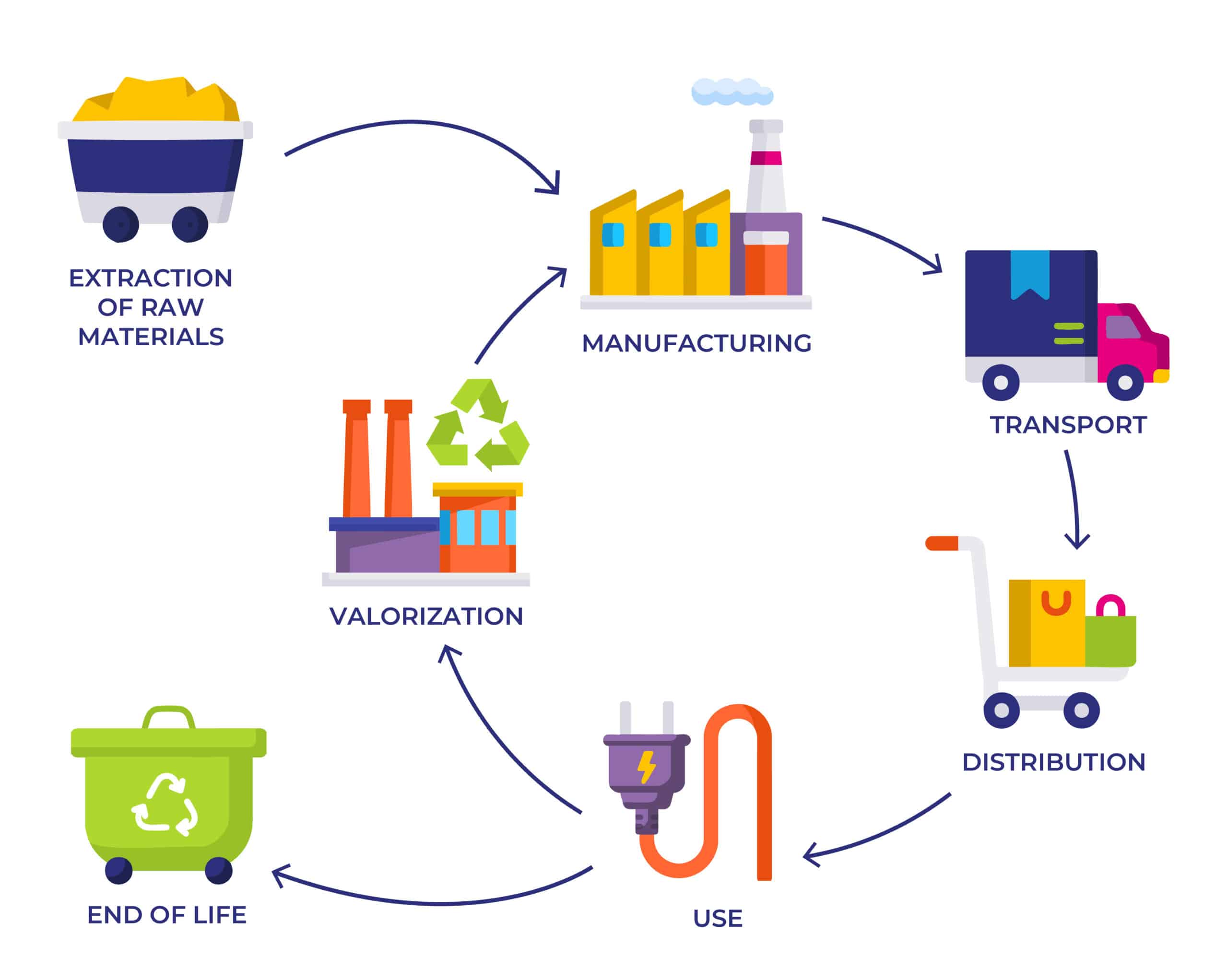
LCA (Life Cycle Assessment) is an environmental evaluation method that quantifies the impacts of a product throughout its entire life cycle:

  • Extraction of raw materials
  • Transformation and manufacturing
  • Transportation
  • Use phase
  • End of life (recycling, incineration, landfill,..)

What types of LCA exist?

An LCA can be carried out according to four different scopes, depending on the life cycle stages considered. Various environmental indicators can also be assessed.

The different scopes of study:

  • Cradle to grave: full life cycle

  • Cradle to gate: from extraction to factory output

  • Gate to gate: intermediate stage (often production)

  • Cradle to cradle: includes recycling within a circular economy approach

The different types of indicators:

  • Single-criterion LCA: only one environmental aspect is assessed, often greenhouse gas (GHG) emissions (in CO₂e).

  • Multi-criterion LCA: more comprehensive, integrating a variety of environmental indicators in the same study. When several criteria are assessed, it is possible to establish a single aggregated score to compare product impacts, even if the indicators are not directly comparable individually.

The choice depends on the study’s objectives: product comparison, environmental labeling, CSR strategy, eco-design, etc.
Entrepôt STEF à Nevian

What is the purpose of a Life Cycle Assessment?

LCA enables companies and institutions to:

  • Identify the most impactful phases of the life cycle
  • Justify design or optimization choices
  • Compare different products or technical scenarios
  • Comply with requirements of environmental labels, tenders, or European directives such as the Ecodesign Directive, the EU Taxonomy, or the upcoming Corporate Sustainability Reporting Directive (CSRD)
  • Communicate transparently about environmental performance to clients, partners, or investors

équipe PINK STRATEGY

What does an LCA measure?

An LCA measures the environmental impact of a product or project. It often relies on a multi-criteria approach with several environmental indicators. Among the most common:

  • Climate change (greenhouse gas emissions – CO₂ equivalent)
  • Water consumption
  • Depletion of natural resources
  • Air and soil pollution
  • Acidification and eutrophication of ecosystems
  • Ecotoxicity, impact on biodiversity, etc.

These indicators are based on harmonized methods and regulatory frameworks, including ISO 14040/44 standards, the European Product Environmental Footprint (PEF) framework, and recognized methodologies such as ReCiPe or ILCD.

What are the steps of an LCA?

Framed by ISO 14040 and ISO 14044, an LCA follows a clear methodological structure:

  • Goal and scope definition
    • What is the function of the product?
    • What functional unit (FU) is used?
  • Life Cycle Inventory (LCI)
    • Data collection: energy consumption, raw materials, transport, emissions, waste
    • Data must be representative of a defined period (reference year) and reflect the real context of the system studied (geography, technology, timeframe).
  • Life Cycle Impact Assessment (LCIA)
    • Translation of flows into impacts using recognized methods
  • Interpretation and critical review
    • Recommendations, improvement points, uncertainties, possible limitations

In some cases (comparative LCA or external communication), an external critical review is required in compliance with ISO 14071, to ensure transparency and robustness of results.

effacement d'empreinte carbone

Why conduct an LCA?

Life Cycle Assessment is today a strategic lever for companies engaged in the environmental transition. It enables you to:

  • Support technical decision-making with objective data
  • Showcase eco-design efforts
  • Anticipate European regulatory requirements
  • Meet growing client expectations for transparency and sustainable products
  • Differentiate yourself in a fast-changing market strongly focused on sustainability

PINK Strategy supports companies in carrying out LCAs tailored to their industrial and regulatory challenges.

Would you like to evaluate the environmental footprint of your products or services?
Contact us now at: contact@pink-strategy.fr


Project carbon impact assessment: how to carry it out effectively ?

Project carbon impact assessment: how to carry it out effectively ?

Climate impact is now a crucial issue in project development. Whether building a business park, setting up a photovoltaic plant, or renovating a major road, project developers are increasingly required to assess and reduce their greenhouse gas (GHG) emissions. This process involves carrying out a project carbon impact assessment.
While some regulations such as the Environmental Impact Assessment (EIA) Directive 2014/52/EU of the European Union list the project concerned by such assessments, this article focuses on what a carbon impact assessment is, what it is used for, and how to carry it out effectively.

What is a project carbon impact assessment ?

A project carbon impact assessment is a methodological process aimed at quantifying, from the design stage, the GHG emissions generated by a project throughout its life cycle, as well as any potential emissions reductions enabled by its implementation. It is part of the broader framework of environmental impact assessments and supports decision-making by integrating climate considerations.

Why is it important to include carbon impact in the environmental study of your project ?

Integrating carbon impact from the design phase helps guide technical choices, promote low-emission options, and anticipate regulatory requirements (such as the European Climate Law 2021/1119/EU, CSRD, etc.). It also improves the project’s social acceptability and can streamline its administrative review.

Appropriate methodological frameworks for a carbon assessment

At the international level, the ISO 14064-2:2019 international standard provides specifications and guidance for quantifying and reporting GHG emissions and reductions at the project level.

Some countries have developed specific methodological frameworks, like France with its ADEME methodological guide (2022) which outlines how to include GHG emissions in environmental impact studies in France.

Entrepôt STEF à Nevian
équipe PINK STRATEGY

Key principles to follow

  • Project boundaries: Clearly define the physical, temporal, and functional limits of the project.
  • Comparative scenarios: Compare the project’s emissions with one or more reference scenarios (“do nothing” and alternative solutions).
  • Life cycle approach: Consider all project stages, including manufacturing, distribution, equipment installation, operation, and end of life.
  • Traceability and transparency: Document all assumptions, data sources, and calculation methods.

How to conduct a project carbon impact assessment ?

In line with ISO 14064-2:2019, a project GHG assessment is structured around the following key steps:

Step 1: Define the project and its objectives

  • Describe the project and its expected impact on GHG emissions.
  • Clarify the GHG objectives (avoidance, reduction, sequestration).
  • Identify relevant stakeholders and reporting needs.

Step 2: Establish the baseline scenario

  • Define a credible baseline scenario representing what would likely happen in the absence of the project.
  • Ensure the scenario reflects realistic technological, economic, and regulatory conditions.
  • Use this as a reference point to quantify the project’s additional GHG impact.

Step 3: Define the boundaries and quantification methodology

  • Determine organisational, operational, and temporal boundaries.
  • Identify relevant gases, sources, and sinks.
  • Select a quantification approach: project-specific data, default emission factors, or modeling.
  • Use recognised databases such as Ecoinvent.

    Step 4: Quantify GHG emissions and removals

    • Collect activity data for both the project and baseline scenarios.
    • Apply appropriate emission or removal factors.
    • Calculate gross and net GHG changes over the defined period.

    Step 5: Assess uncertainty and risks

    • Identify key assumptions and data limitations.
    • Evaluate the level of uncertainty in the estimates.
    • Document any mitigation strategies for uncertainties.

    Step 6: Document and report results

    • Prepare a transparent report detailing the methodology, data sources, assumptions, and results.
    • Include estimates of reductions or removals achieved by the project.
    • Ensure consistency with ISO 14064-2 reporting requirements.

    Step 7: Verification and validation (optional but recommended)

    • Consider having the project assessment independently verified by a qualified third party.
    • This enhances credibility and may be required for participation in carbon markets or funding mechanisms.
    effacement d'empreinte carbone

    What are the expected benefits of a project carbon impact assessment ?

    Improved environmental performance

    By identifying the main action levers, a carbon impact assessment enables significant emission reductions for the project.

    A decision-making tool

    It helps project owners make informed choices to reduce GHG emissions. Other environmental, technical, or financial constraints should also be considered.

    A contribution to local planning

    Carbon assessments support local authorities in integrating climate impact into their development strategies, aligned with carbon neutrality goals.

    Key points to bear in mind when carrying out a project carbon impact assessment

    A project carbon impact assessment is a strategic analysis tool. Beyond regulatory compliance, it enables stakeholders to design projects that are aligned with planetary boundaries and international climate targets.

    Do you want to assess the carbon impact of your project ?

    With dozens of project carbon footprint studies carried out, PINK Strategy’s experts are here to guide you through the process !

    Photovoltaic glare study : is my solar project affected?

    Photovoltaic glare study : is my solar project affected?

    When installing solar panels, the primary goal is to generate clean energy and optimize efficiency. But have you ever heard of the risks of glare or light reflection?

    This issue often arises in photovoltaic projects because it can directly impact nearby sensitive infrastructures, such as airports or highways.
    Indeed, solar panel installations can produce reflective glare that may disturb pilots during landing, air traffic controllers, motorists, or nearby residents. For this reason, glare studies have been introduced to assess the impact of solar installations on the surrounding environment.

    What is a photovoltaic glare study and why is it important?

    A glare study is a technical analysis designed to assess the risk of disturbance caused by sunlight reflected off solar panels toward their surroundings. It is based on digital simulations that take into account:

    • The orientation and tilt of the panels
    • Sun rays throughout the year
    • The position of nearby sensitive infrastructures (runways, roads, homes, etc.)
    • The intensity and duration of reflections at different times of the day and year

    The glare study is conducted using modeling tools that simulate light reflection from the panels based on their location and sun exposure.

    Entrepôt STEF à Nevian

    Why conduct a glare study for solar panels?

    Depending on their orientation, solar panels can cause significant visual discomfort for certain users due to reflected light.

    The main reasons justifying such a study include:

    • Aviation safety: Pilots and air traffic controllers need clear visibility during takeoff and landing. Poorly assessed glare could pose a safety risk.
    • Road safety: Strong reflections on a road can impair drivers’ vision and lead to accidents.
    • Visual comfort for residents: People living near solar installations may be exposed to disturbing glare.

    Who needs to request a solar glare study?

    • The French Civil Aviation Authority (DGAC) and the Military Air Traffic Directorate (DIRCAM): for projects near airfields, helipads, and ultralight platforms (ULM).
    • Departmental Territorial Directorates (DDT) and Regional Directorates for Environment, Development and Housing (DREAL): when close to road or heritage infrastructures.
    • Municipalities: as part of building permit applications or public inquiries.
    équipe PINK STRATEGY

    What does the DGAC regulation say about photovoltaic reflections?

    Until recently, a glare study was required for any photovoltaic installation within 3 km of an airfield. However, the latest revision of the DGAC’s Technical Information Note (NIT), published in October 2024, removed this obligation for airfields open to public air traffic.

    Why this change?

    Studies conducted in recent years have shown that the risk of glare for pilots, air traffic controllers, and AFIS (Aerodrome Flight Information Service) personnel is negligible.

    As a result, it is no longer necessary to systematically require such studies from project developers.

    Exceptions to be aware of :

    However, not all projects benefit from this regulatory simplification!

    • Military and private airfields, ULM platforms, and helipads are not covered by this note and may still require glare studies.
    • Local authorities (DDT, DREAL, municipalities, etc.) may continue to request such studies depending on the specific context of the project.

    So, while the requirement has been relaxed for solar projects near civilian airfields, it is still recommended to check local regulations before launching a project.

    What is the purpose of a glare study?

    A glare study plays a key role in securing a solar project. Even if it is no longer always mandatory, it remains a crucial tool for ensuring compliance with local authority requirements or certain infrastructure standards.

    By identifying risks related to light reflection, it helps anticipate potential issues that could lead to costly adjustments after installation.

    Moreover, it provides a strong technical argument to reassure stakeholders, whether they are airfield operators, local communities, or residents. By demonstrating that the glare presents no danger, it facilitates obtaining permits and strengthens the project’s credibility.

    Are you concerned about glare studies for your solar projects? Our experts are here to help. Feel free to contact us to learn more !

    Tenders available with an ECS certificate

    Tenders available with an ECS certificate

    On 26 March 2025, the Commission de Régulation de l’Energie, which is the French Energy Regulation Council, published the tender specifications for ground-mounted photovoltaic power plants. These specifications applied to the bidding period which ran from 2 June to 13 June 2025. To respond, photovoltaic developers had to submit the ECS score calculated using the PPE2 V1 methodology for the photovoltaic modules they wished to install.

    CRE Tenders: How Do They Work ?

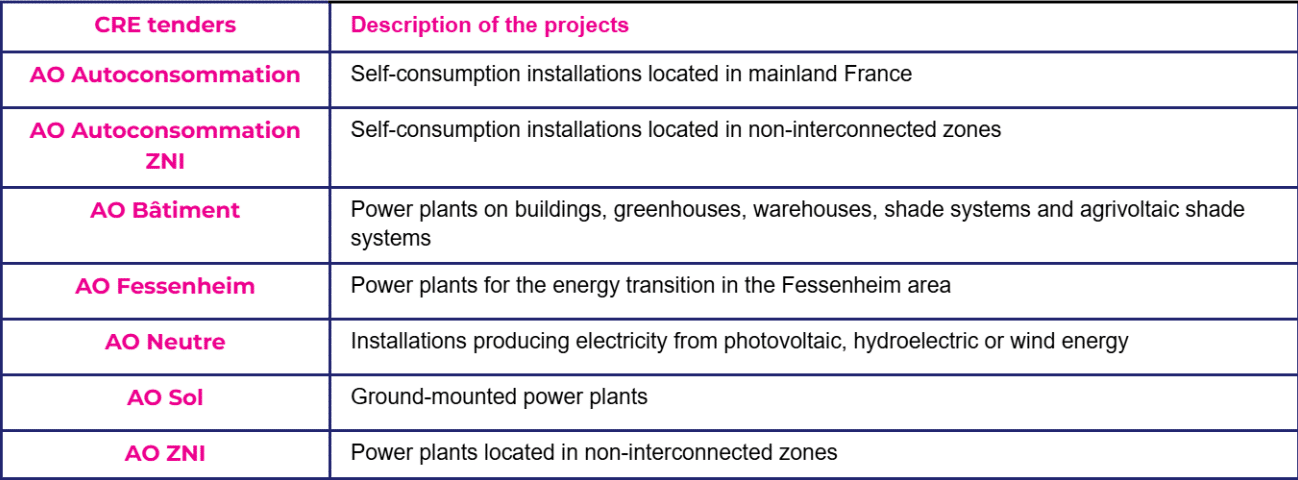
    The Commission de Régulation de l’Energie (CRE) regularly publishes invitations to tender for photovoltaic installations in France. These tenders differ in terms of the nature and location of the photovoltaic plants, and the cumulative power demand. Developers generally have a two-week window to submit an application. Winning a call for tenders entitles you to a guaranteed preferential feed-in tariff for the energy you produce. CRE calls for tenders only concern installations of more than 500kWp installed.

    Entrepôt STEF à Nevian
    équipe PINK STRATEGY

    Why is the ECS certificate important in your application process?

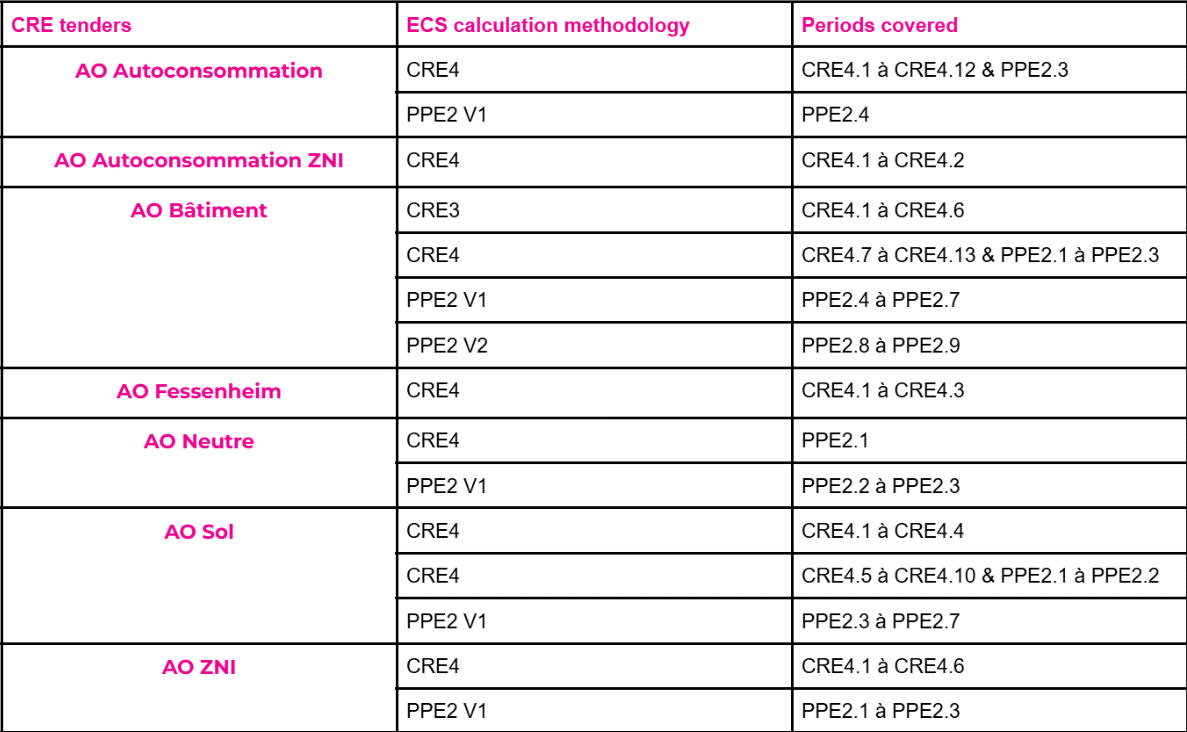
    To respond to public calls for tenders and open window mechanisms, developers must include the ECS score of the photovoltaic modules they plan to use in their application. The ECS score counts towards the overall score of the application and is therefore a key factor in winning the tender. Different calculation methodologies are used to determine the ECS score: it varies according to the period and the tender for which the developer is applying.

    Each bidding phase has its own specific rules.

    4 main methodologies are considered in the calls for tender published by the CRE:


    • CRE3 calculation methodology
    • CRE4 calculation methodology
    • PPE2 V1 calculation methodology
    • PPE2 V2 calculation methodology

    A different methodology for each period

    For each period of the CRE calls for tenders, only one methodology shall be applied to calculate the ECS score. The methodologies to be used are summarised below. 

    Contact a member of the PINK Strategy team to find out the calculation methodology to be applied to your call for tenders. 

    effacement d'empreinte carbone
    Why is everyone talking about carbon footprint ?

    Why is everyone talking about carbon footprint ?

    Did you know that 78% of European companies now have a strategy for reducing their carbon footprint ? In a context where climate change is becoming a major concern, the term “GHG Protocol” is on everyone’s lips. But why is it so popular ?

    Understanding and measuring one’s environmental impact is now an imperative for businesses, local authorities and even individuals. In this article, we explore what a GHG Protocol is, why it has become essential and how to implement it effectively.

    1. Understanding GHG Protocol

    What is GHG Protocol ?

    GHG Protocol is a methodology developed in 2001 which provides guidelines to measure greenhouse gas (GHG) emissions. It exists alongside the French Bilan Carbone® methodology, developed in 2004, which provides guidelines and tools to perform the measures and identify the dependence of an activity, an organisation or a product to fossil energies.

    These methods make it possible to take into account all sources of direct and indirect emissions linked to energy, transport, raw materials or also wastes, in order to draw up an action plan to reduce these emissions. In particular, they enable organisations to meet the requirements of the ISO 14064-1 standard.

    Why is it essential today ?

    Faced with the challenges of global warming, regulations are becoming stricter and consumers are demanding greater transparency. The latest report from the IPCC (Intergovernmental Panel on Climate Change) underlines the urgent need for action to limit global warming to 1.5°C, and stresses the crucial role of businesses and organisations in reducing greenhouse gas emissions. Carrying out a GHG Protocol gives you a better understanding of your ecological impact and helps you identify practical ways to improve.

    Entrepôt STEF à Nevian

    2. The importance of GHG Protocol today

    A regulatory imperative

    With regulations such as the law on duty of vigilance and extra-financial reporting for large companies, GHG Protocol is becoming a must. For example in France, some companies are required to carry out a GHG Protocol and to implement actions to reduce their carbon footprint.

    A strategic asset for companies

    Carrying out a GHG Protocol is more than just a legal requirement, it is also a powerful lever for :

    • Reduce costs by optimising energy consumption

    • Improving brand image by demonstrating a commitment to the environment

    • Anticipate future environmental regulations

    Growing demand from consumers and professionals

    Consumers are increasingly attentive to the ecological impact of the products and services they buy. A well-managed GHG Protocol makes it possible to offer products and services that are more respectful of the environment and therefore more attractive.

    Similarly, professionals, partners and investors expect companies to adopt responsible and transparent practices when it comes to their carbon footprint. A structured emissions reduction approach is therefore becoming an important selection criterion in commercial and financial relationships.

    3. How to carry out an effective GHG Protocol ?

    Step 1: Define the scope of the study and raise team awareness

    Before even starting the GHG Protocol, it is essential to involve all the stakeholders in the organisation. This stage enables teams to be made aware of the carbon issues, to define the objectives of the assessment and to identify the necessary resources. A proper scoping exercise guarantees an effective approach that is consistent with the company’s overall strategy.

    Step 2: Data collection

    Gather all the information you can on your energy consumption, travel, purchasing, production and waste. The more accurate the data, the more reliable the analysis.

    Step 3: Use a recognised calculation methodology

    Tools such as the GHG Protocol or ADEME’s Bilan Carbone® method can be used to analyse emissions according to three scopes:

    • Scope 1: Direct emissions (e.g. fuel combustion, heat production, etc.)
    • Scope 2: Indirect emissions linked to the energy consumed
    • Scope 3: Indirect upstream and downstream emissions (e.g. transport of goods, product life cycle, etc.)

    Step 4: Identify reduction targets and levers

    Once the diagnosis has been made, an action plan must be drawn up to reduce emissions. This may include:

    • Adopting reduction targets validated by the SBTi (Science Based Targets initiative), a reference for climate trajectories aligned with the Paris Agreement
    • Optimising the energy efficiency of buildings
    • Switching to renewable energies
    • Reducing business travel and promoting teleworking
    • Eco-design of products

    Step 5: Set up a monitoring system

    Reducing emissions is a process of continuous improvement. It is essential to regularly monitor progress and adjust actions accordingly. The ACT (Accelerate Climate Transition) method is a recognised approach for assessing the transition of companies towards a low-carbon economy and structuring an effective monitoring process.

    Step 6: Declare your results and strategy

    Communicating your GHG Protocol is essential to ensure transparency and demonstrate your commitment to the ecological transition. There are a number of organisations that can help you declare your results and assess your low-carbon strategy:

    • SBTi (Science Based Targets initiative): Possibility of publicly committing to reduction targets set in accordance with scientific recommendations
    • CDP (Carbon Disclosure Project): International platform for reporting on the carbon footprint of companies
    • WBA (World Benchmarking Alliance): Ranking of companies according to their commitment to sustainable development

    Step 7: Get yourself assessed

    A critical review by a certified third party guarantees the quality and credibility of the GHG Protocol. It is recommended that you go through specialist organisations such as:

    • ACT Evaluation : Evaluates the climate transition strategy of companies
    • Afnor verification: Certification of environmental data and commitments
    équipe PINK STRATEGY

    4. What benefits can you expect from a GHG Protocol ?

    Reduced operating costs

    Optimising energy consumption and production processes can generate substantial savings.

    Competitive advantages

    A clear and measurable commitment to the climate is a real differentiator in the marketplace.

    Better regulatory compliance

    Preparing now for future legal obligations, such as the CSRD (Corporate Sustainability Reporting Directive), helps avoid sanctions and anticipate market developments.

    Conclusion

    The GHG Protocol is much more than a simple measurement method: it is a strategic lever for any organisation concerned about its environmental impact. Beyond the legal obligations, it is an effective means of optimising costs, improving image and meeting consumer expectations.

    Have you ever considered carrying out a GHG Protocol for your business ? Contact us using the form below to find out how we can help !