
The battery sector is undergoing rapid transformation, driven in particular by the development of electric vehicles, energy storage and electricity grid flexibility. To regulate this development and reduce the environmental impacts associated with batteries, the European Union adopted Regulation (EU) 2023/1542 concerning batteries and waste batteries.
The objective is twofold: to reduce the environmental footprint of batteries while strengthening their durability, safety, traceability and circularity.
The new requirements are being introduced progressively, with deadlines extending until 2036. As an EU regulation, it is directly applicable throughout the European Union. The same regulatory requirements, criteria and thresholds therefore apply across the european market, regardless of the country in which the battery is manufactured or placed on the market.
Which batteries are covered?
The regulation applies to batteries placed on the market or put into service in the European Union, regardless of their origin or place of manufacture. It covers batteries sold separately as well as those integrated into appliances or vehicles.
The regulation distinguishes five categories:
-
-
Portable Batteries: These include batteries used in electronic devices, toys and small equipment.
-
SLI Batteries: Starting, Lighting and Ignition batteries are mainly used for starting, lighting and ignition in vehicles.
-
Light Means of Transport (LMT) Batteries: This category includes batteries used in electric bicycles, electric scooters and hoverboards.
-
Electric Vehicle (EV) Batteries: These are batteries intended to provide traction for electric or hybrid vehicles.
-
Industrial Batteries: This category includes batteries used in industrial applications and energy storage systems.
-
Carbon footprint: Measuring and reporting battery emissions
The regulation requires manufacturers to calculate the carbon footprint associated with a battery’s life cycle and report it according to a methodology defined at European level.
The carbon footprint is expressed in kgCO₂e per kWh of the total energy supplied by the battery over its expected lifetime. The declaration must specify the carbon footprint associated with the different stages of the life cycle and include information allowing the results to be verified.
What are the deadlines?
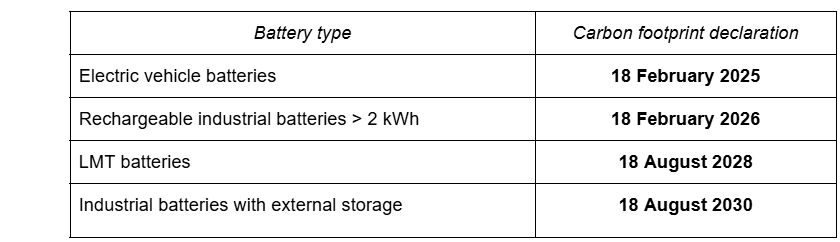
The regulation goes further: certain batteries will also have to be classified according to their carbon footprint performance.
For electric vehicle batteries, this carbon footprint performance class requirement is scheduled to apply from 18 August 2026, subject to the conditions relating to the adoption of the relevant European implementing acts. It will then be extended to other categories according to a progressive timetable.
In the longer term, maximum life-cycle carbon footprint thresholds will also be introduced:
-
- EV batteries: from 18 February 2028
- Rechargeable industrial batteries > 2 kWh: from 18 February 2029
- LMT batteries: from 18 August 2031
- Industrial batteries with external storage: from 18 August 2033
For manufacturers, the challenge is therefore to anticipate the collection of environmental data across the entire supply chain.

Mandatory recycled materials
The regulation gradually introduces requirements regarding the amount of recycled raw materials used in certain batteries.
The materials concerned are:
-
- Cobalt
- Lead
- Lithium
- Nickel
A first step from 2028
From 18 August 2028, certain batteries will have to be accompanied by documentation indicating the share of materials recovered from manufacturing waste and post-consumer waste. This requirement applies in particular to:
-
- Industrial batteries > 2 kWh, excluding batteries with exclusively external storage;
- Electric vehicle batteries;
- SLI batteries.
It will be extended to LMT batteries from 18 August 2033.
Minimum rates from 2031
From 18 August 2031, the relevant industrial batteries > 2 kWh, EV batteries and SLI batteries will have to comply with the following minimum recycled material content rates:
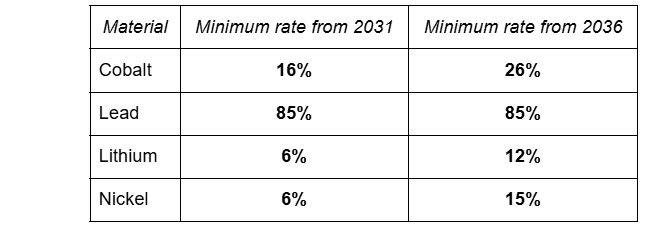
From 2036, these strengthened targets will also apply to the relevant LMT batteries.
Note: 2028 therefore corresponds to the requirement to document recycled content, while minimum rates become mandatory from 2031 and are then increased in 2036.
Durability and performance: batteries designed to last
The regulation also introduces minimum requirements for electrochemical performance and durability.
Since 18 August 2024, rechargeable industrial batteries with a capacity above 2 kWh, light means of transport (LMT) batteries and electric vehicle batteries have been required to be accompanied by information relating to their performance and durability.
From 18 August 2027, rechargeable industrial batteries above 2 kWh, excluding batteries with exclusively external storage, will have to comply with minimum performance and durability values defined at European level.
General-purpose portable batteries will also be subject to minimum performance and durability requirements from 18 August 2028, excluding button cells.
The objective is to promote batteries with a longer service life and sustained performance over time, in order to limit premature replacement and waste generation.
Repairability: making batteries easier to remove and replace
The regulation also introduces important requirements concerning the design of products incorporating batteries.
Portable batteries
From 18 February 2027, portable batteries incorporated into products will, except where otherwise provided for by the regulation, have to be designed in such a way that they can be removed and replaced by the end-user throughout the entire lifetime of the product.
Instructions and safety information relating to the use, removal and replacement of the battery must also be made available.
LMT batteries
For products incorporating LMT batteries, the batteries and the cells within the battery pack must be removable and replaceable by an independent professional throughout the lifetime of the product.
This development therefore encourages a design approach focused more on:
repair → replacement → reuse → second life → recycling
rather than replacing the entire product.

Safety: strengthened requirements
The regulation also strengthens requirements relating to battery safety and the restriction of certain hazardous substances.
Harmonised limits are notably provided for:
-
- Mercury: 0.0005% maximum by mass
- Cadmium: 0.002% maximum by mass
- Lead in portable batteries: 0.01% maximum by mass from 18 August 2024
The regulation also provides for specific safety testing requirements, particularly for stationary energy storage systems.
The objective is to ensure that batteries remain safe during their manufacture, use, storage, transport, dismantling and recycling.
Labelling, CE marking and traceability
The regulation strengthens the amount of information available on batteries.
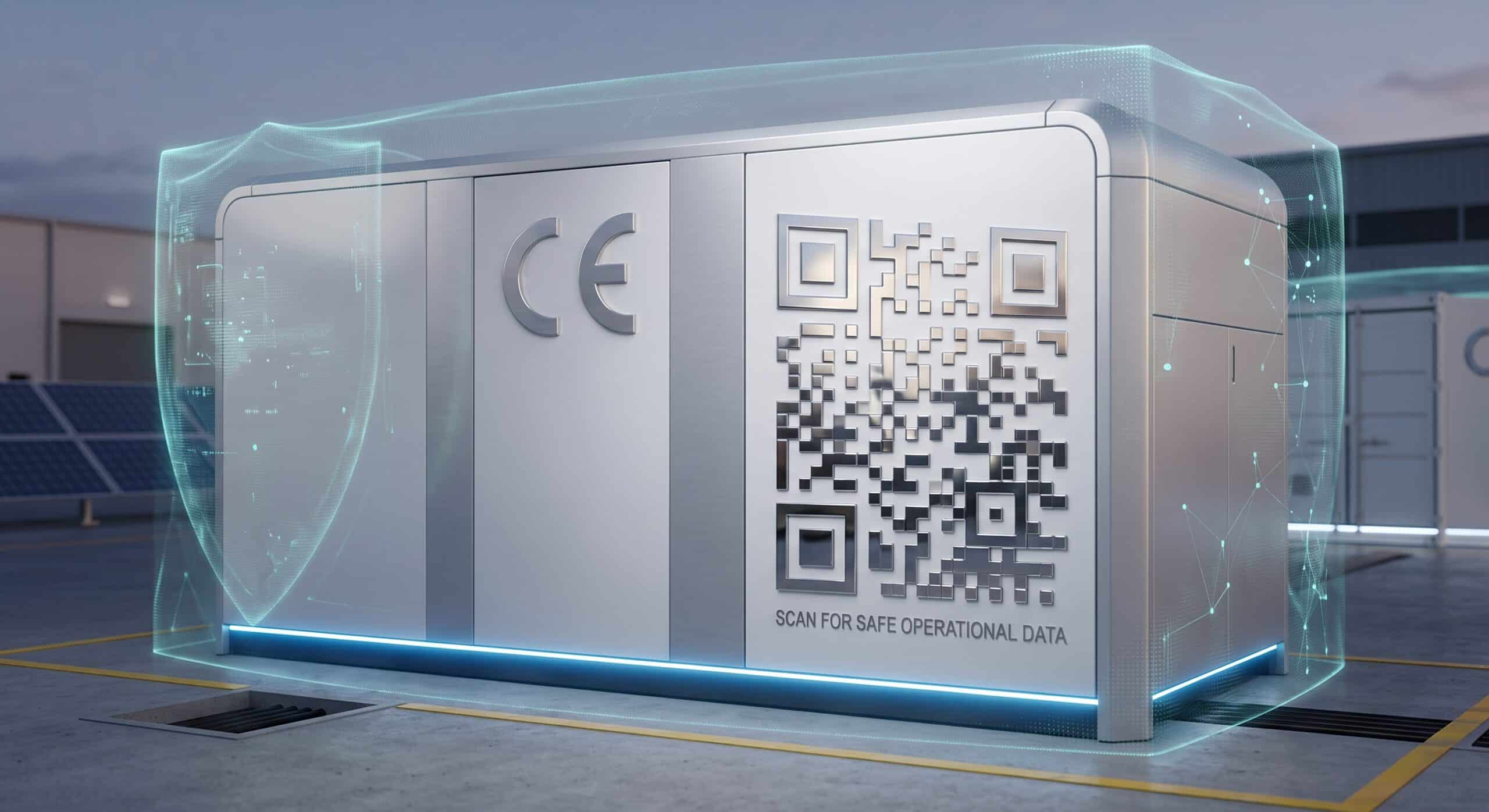
Since 18 August 2024, batteries have been required to bear the CE marking, certifying their compliance with the applicable European requirements.
More detailed labelling requirements are also being introduced progressively to provide information about the battery, including its capacity, performance, composition and end-of-life management.
The battery passport: a new digital identity
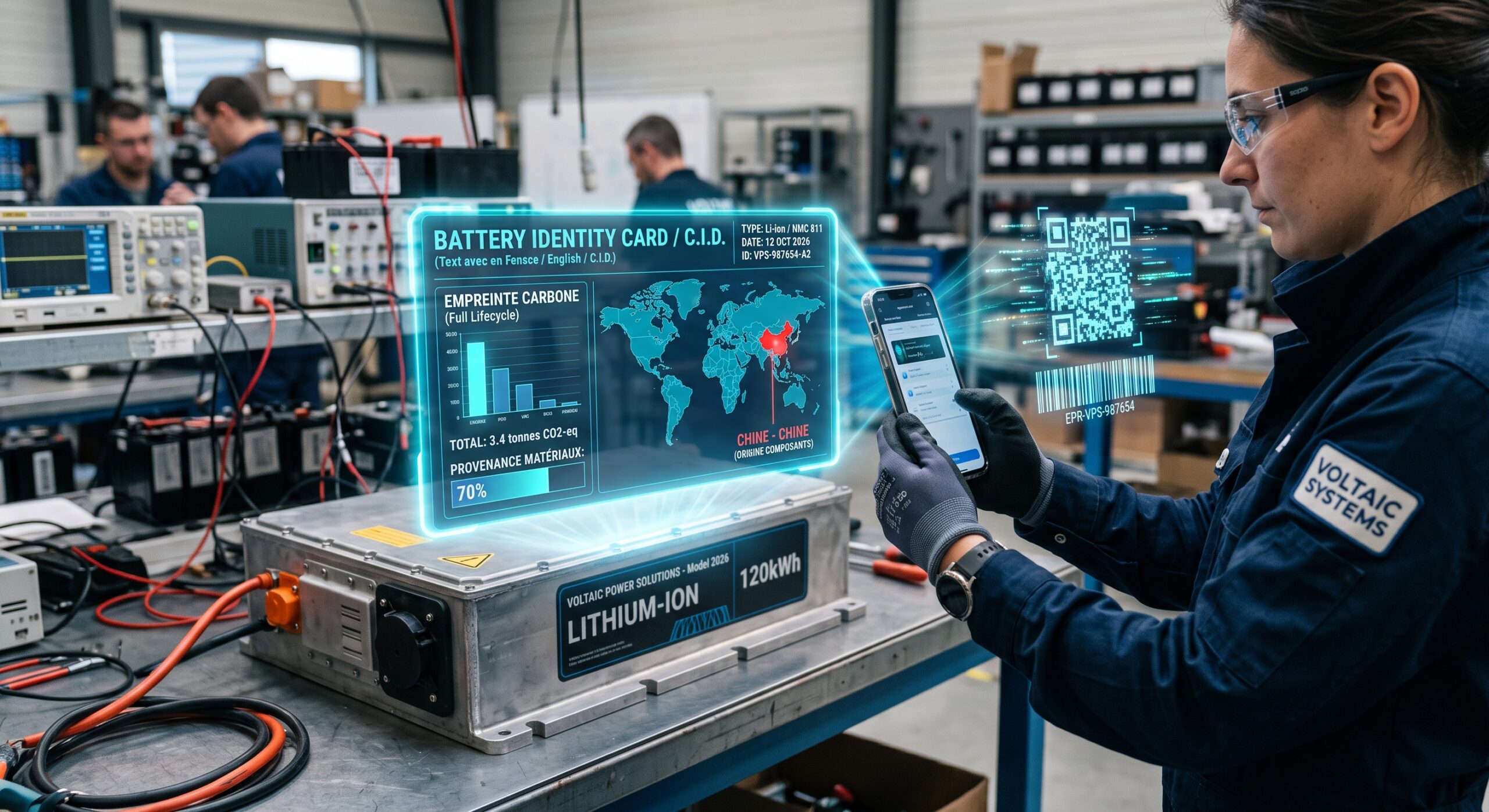
One of the most significant changes is the introduction of the digital battery passport.
From 18 February 2027, every:
-
- LMT battery;
- industrial battery with a capacity above 2 kWh;
- electric vehicle battery;
placed on the market or put into service in the European Union will have to have a digital Battery Passport.
The Battery Passport will be associated with the battery and provide access to various types of information, including:
-
- Model identification;
- Composition and origin of raw materials;
- Carbon footprint;
- Performance and lifetime;
- Recycled material content;
- Traceability information;
- Information required for dismantling, repair and recycling.
Some information will be publicly accessible, while other information will be reserved for authorities, notified bodies or actors with a legitimate interest.
The Battery Passport will therefore become a key tool for traceability and transparency throughout the value chain.
End-of-Life management and extended producer responsibility
Finally, the regulation does not stop at manufacturing.
It also strengthens requirements relating to the collection, treatment and recycling of waste batteries.
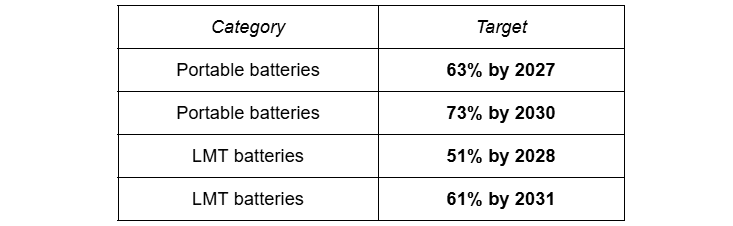
Collection targets are notably provided for portable batteries and LMT batteries:
The regulation also introduces material recovery targets:
-
- Lithium: 50% by the end of 2027 and 80% by the end of 2031;
- Cobalt, copper, lead and nickel: 90% by the end of 2027 and 95% by the end of 2031.
This approach is based on the principle of Extended Producer Responsibility (EPR): producers and other relevant stakeholders must contribute to the management of batteries at the end of their life.
Regulation (EU) 2023/1542 marks a major change in European battery regulation. It progressively transforms batteries into products whose compliance must be demonstrated throughout their entire life cycle, rather than only at the time they are placed on the market.
Wa are here to support you
Would you like to prepare your company for the requirements of Regulation (EU) 2023/1542 or develop an environmental approach tailored to your challenges? Contact our team of experts for personalised support: contact@pink-strategy.fr