
Are you planning to install a solar power plant or a photovoltaic project? Before you get started, one essential question arises: is your project subject to an Environmental Impact Assessment ?
Solar energy is essential for the energy transition. France is accelerating its deployment, notably through the Law for the Acceleration of Renewable Energy Production (APER). However, every solar project has an environmental footprint.
This is why the Environmental Code regulates these projects and, in certain cases, mandates an environmental impact assessment. This is a way to evaluate the potential effects of a project before it is launched. To find out more about impact assessments, you can read our dedicated article.
In this article, we help you clarify whether your photovoltaic project falls under this obligation. Exemption, case-by-case examination, or systematic assessment ? Let’s have a look at what this means in practice.
When do I need to conduct an environmental impact assessment?
The obligation to carry out an impact assessment is defined by Article R. 122-2 of the french Environmental Code and its annexed nomenclature.
It defined the projects concerned according to their nature and size. There are three possibilities for a project:
- Exemption: The project is not subject to the procedure.
- Case-by-case examination: The project developer must file a simplified folder, and the competent authority (often the Regional Prefect or DREAL – Regional Directoration for Environment, Planning, and Housing-) decides whether a full impact assessment is necessary.
- Systematic environmental assessment: Due to its size, the project is deemed to have a significant potential impact, making a complete and detailed study is then mandatory.
Knowing which rules apply to your project is an important step. Submitting an application without an environmental assessment when one is required can lead to the refusal of your building permit or operating license.
What are the regulations applying to photovoltaics projects ?
The regulations for photovoltaic projects are defined in a specific section of the Environmental Code. This is section 30 in the nomenclature of Article R. 122-2.
This section was modified by Decree No. 2022-970 of July 1, 2022, and simplifies the criteria defining the obligation to perform an environmental impact assessment for a project. The objective is clear: to exclude projects on already built-up surfaces (roofs, parking lots) in order to focus the assessment effort on ground-mounted power plants.
It should also be noted that this procedure is distinct from other requirements, such as the requirement to install solar carports on parking lots larger than 1,500 m² provided for by the APER law for example.

What are the regulations applying to photovoltaics projects ?
The regulations for photovoltaic projects are defined in a specific section of the Environmental Code. This is section 30 in the nomenclature of Article R. 122-2.
This section was modified by Decree No. 2022-970 of July 1, 2022, and simplifies the criteria defining the obligation to perform an environmental impact assessment for a project. The objective is clear: to exclude projects on already built-up surfaces (roofs, parking lots) in order to focus the assessment effort on ground-mounted power plants.
It should also be noted that this procedure is distinct from other requirements, such as the requirement to install solar carports on parking lots larger than 1,500 m² provided for by the APER law for example.
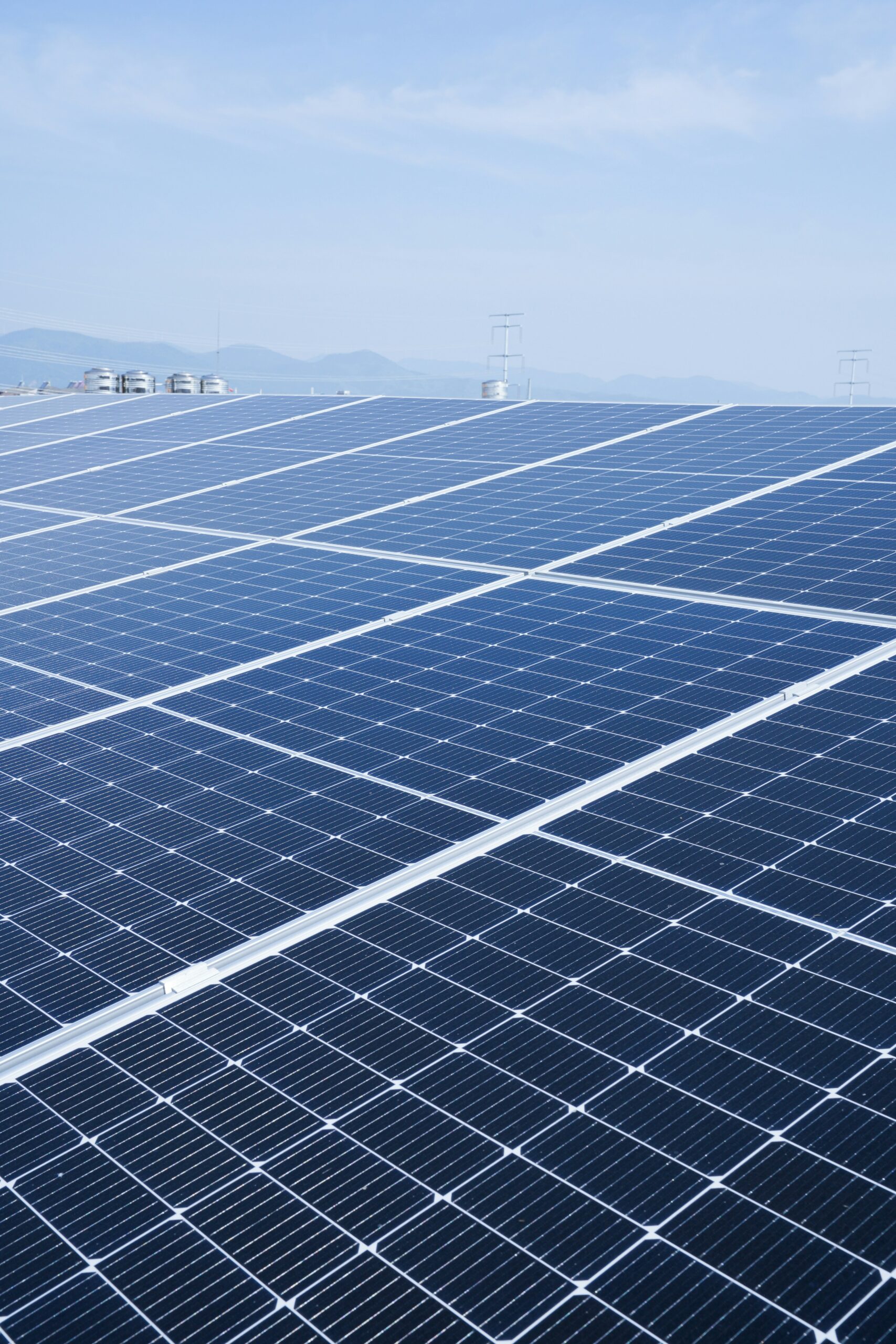
Is my photovoltaïc project subject to an environmental impact assessment?
This depends on two criteria: the typology of the project (location) and its power (kilowatt-peak – kWp).
Case 1: Projects Exempt from Environmental Assessment
Your project is not concerned by an environmental assessment if it is:
- A rooftop installation.
- An installation on carports.
- An installation on hangars/sheds.
- An installation with a power output of less than 300 kWp.
Case 2: Projects Subject to a “Case-by-Case” Examination
Your project must apply for a “case-by-case examination” if:
- It is not on a roof nor on a parking shade structure (generally ground-mounted plants and vertical panels).
- It has a power output between 300 kWp and 1 MWp.
In this scenario, you must compile a specific dossier (Cerfa form n°14734). The environmental authority analyzes this document to decide if a full impact assessment is required.
Case 3: Projects Subject to Systematic Impact Assessment
Your project must mandatorily include a full impact assessment if:
- It is not on a roof nor on a parking shade structure (generally ground-mounted plants and vertical panels).
It has a power output greater than or equal to 1 MWp.
Impact Assessment: The Case of ICPE Projects
In addition to power thresholds, you must verify if your project falls under the ICPE regime (Classified Installations for the Protection of the Environment). This is a regulatory framework for sites presenting risks or nuisances to the environment and the neighborhood.
A photovoltaic plant is generally not an ICPE, but it can become one if it includes battery storage systems with a capacity ≥ 100 MWh or a charging power > 600 kW. Furthermore, if you install your plant on a site already classified as an ICPE, your project will be considered a modification of that installation.
The consequence here is important: If your project (or its storage component) falls under the ICPE Authorization (A) regime, it will be systematically subject to an impact assessment, regardless of its power or typology.
Why Anticipate ICPE Criteria?
Knowing these criteria during the study phase of your project can help you saves both time and money. It also allows you to secure the project’s execution and obtain the necessary authorizations. Your 3 advantages?
- Anticipate costs and delays related to the environmental impact assessment.
- Secure your project and its building permits: Following the correct procedure prevents your application from being rejected due to procedural topics.
- Adapt the project design: If you know your 900 kWp ground-mounted project will be subject to “case-by-case” review, you might choose a site with lower environmental stakes (degraded land or industrial brownfields) to increase your chances of avoiding a full impact assessment.
By correctly qualifying your project and anticipating its constraints, you limit risks and maximize your chances of success.
Do you have projects that are subject to environmental impact assessment requirements, or would you like to learn more? Our experts are here to help you!